You've updated your CV, created a home office, and started searching for opportunities that let you work with international clients without relocating. Yet “remote sales rep” can still feel vague. Does the role mean cold calling all day, running product demos, closing contracts, or managing existing accounts?
For professionals in Mexico City, Bogotá, South Africa, and other supported markets, remote sales can offer a practical route into cross-border work. The opportunity is real, but success depends on choosing the right sales track, matching your working hours to buyers, and proving that you can manage a pipeline without constant supervision.
What It Means to Be a Remote Sales Rep Today
A professional in Bogotá might begin the day reviewing new leads, spend the afternoon on video calls with U.S. prospects, and finish by updating follow-up tasks in a CRM. Someone in Mexico City could work a similar schedule while specializing in outbound prospecting or appointment setting. Neither person needs to travel to a client's office, but both still need to create trust, handle objections, and move opportunities forward.
A remote sales rep sells through digital channels, including phone, email, social media, video conferencing, and CRM workflows. The title covers several different responsibilities, from finding potential buyers to negotiating a deal or supporting an account after purchase. The work is location-flexible, but it isn't structure-free. Employers still expect clear communication, dependable availability, accurate records, and consistent progress against agreed goals.

Remote selling has moved into the mainstream. One 2026 industry summary reports that 87% of B2B companies use remote or hybrid sales models, compared with 64% in 2020, and that 73% of B2B sales interactions happen through remote channels (GreetNow's remote sales statistics). The same source reports that remote reps make 48% more calls per day than in-office counterparts and that 67% report higher productivity when working from home. These figures don't mean every remote role is easy or flexible. They show that digital selling is now a core revenue function.
The practical question is whether your strengths fit the role. You'll need to communicate clearly without in-person cues, organize your own day, respond reliably across channels, and learn the company's sales process quickly. For LATAM candidates, language ability and schedule compatibility can be just as important as previous sales experience.
Different Types of Remote Sales Roles
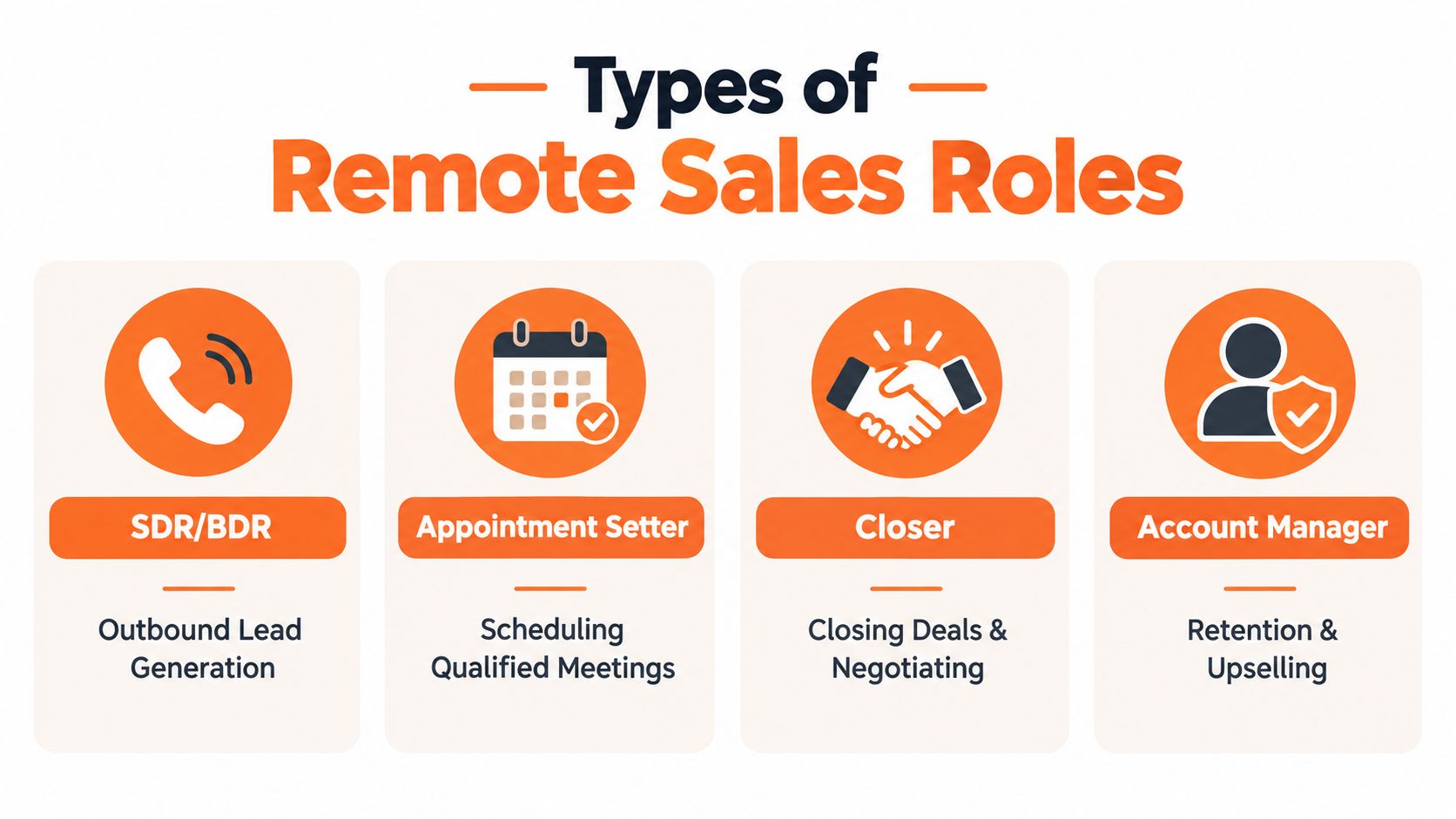
Remote sales careers split into distinct tracks, and the difference matters when you apply. A person who enjoys high-volume outreach may thrive as an SDR, while someone with negotiation experience may be better suited to a closer or account executive role.
SDR and BDR positions
Sales development representatives and business development representatives usually create early-stage pipeline. They research accounts, identify decision-makers, write outreach messages, make calls, qualify interest, and book meetings for another seller. The work rewards persistence, concise communication, and the ability to learn a target market quickly.
This track can suit candidates moving from customer service, recruitment, appointment setting, or inside sales into B2B selling. Your profile should show activity, follow-up discipline, and examples of how you handled rejection or opened conversations.
Appointment setters
Appointment setters focus on turning initial interest into qualified meetings. They may contact leads by phone, email, or text, confirm fit, and schedule a conversation with a closer or account executive. The role can be narrower than an SDR position, but it still demands judgment. Booking unsuitable meetings creates noise and damages trust with the sales team.
Closers and account executives
Closers take qualified opportunities through presentation, objection handling, negotiation, and purchase. Account executives may manage the full sales cycle, from discovery through closing, with more responsibility for forecasting and deal strategy. These roles typically require stronger consultative selling skills and comfort discussing commercial terms.
Account management
Account managers protect and expand existing revenue through renewals, relationship management, upselling, and cross-selling. They need patience, organization, and the ability to coordinate customer needs with internal teams.
A 2026 hiring dataset reports remote closer roles at 27% of postings, appointment setters at 18%, SDR and BDR roles at 20%, and AEs at 22% (Backpack Closers' remote sales hiring index). The same evidence indicates that commission-only structures are concentrated in closer and setter roles, while they're uncommon in AE positions. Read compensation terms carefully, because the role title alone won't tell you how income is structured.
Core Responsibilities and Daily Workflow
Remote selling works best when you treat the day as a sequence of selling blocks, not as a stream of notifications. Your exact schedule will vary, but the work usually follows the customer journey.
Start with preparation
Review your assigned accounts, open opportunities, scheduled meetings, and overdue follow-ups before beginning outreach. Research should be specific enough to make your message relevant, but not so extensive that it replaces prospecting. Identify the buyer, the likely business problem, and the next action you want the prospect to take.
Create conversations
Outbound work can include calls, personalized emails, social messages, and responses to inbound enquiries. Use a clear reason for contacting the prospect, ask a focused question, and record the outcome immediately. A call that isn't logged becomes invisible to the rest of the team and can lead to duplicated outreach.
Run and advance meetings
During discovery calls or demos, listen for the buyer's priorities, decision process, timing, and concerns. Don't turn every conversation into a product monologue. A useful meeting ends with a defined next step, whether that's a technical review, proposal, internal discussion, or a clear decision not to proceed.
Protect follow-up time
Follow-up is where many otherwise capable reps lose momentum. Send the agreed information promptly, summarize the buyer's stated needs, and schedule the next task in the CRM. Keep your notes factual and useful to another team member who may need to understand the account.
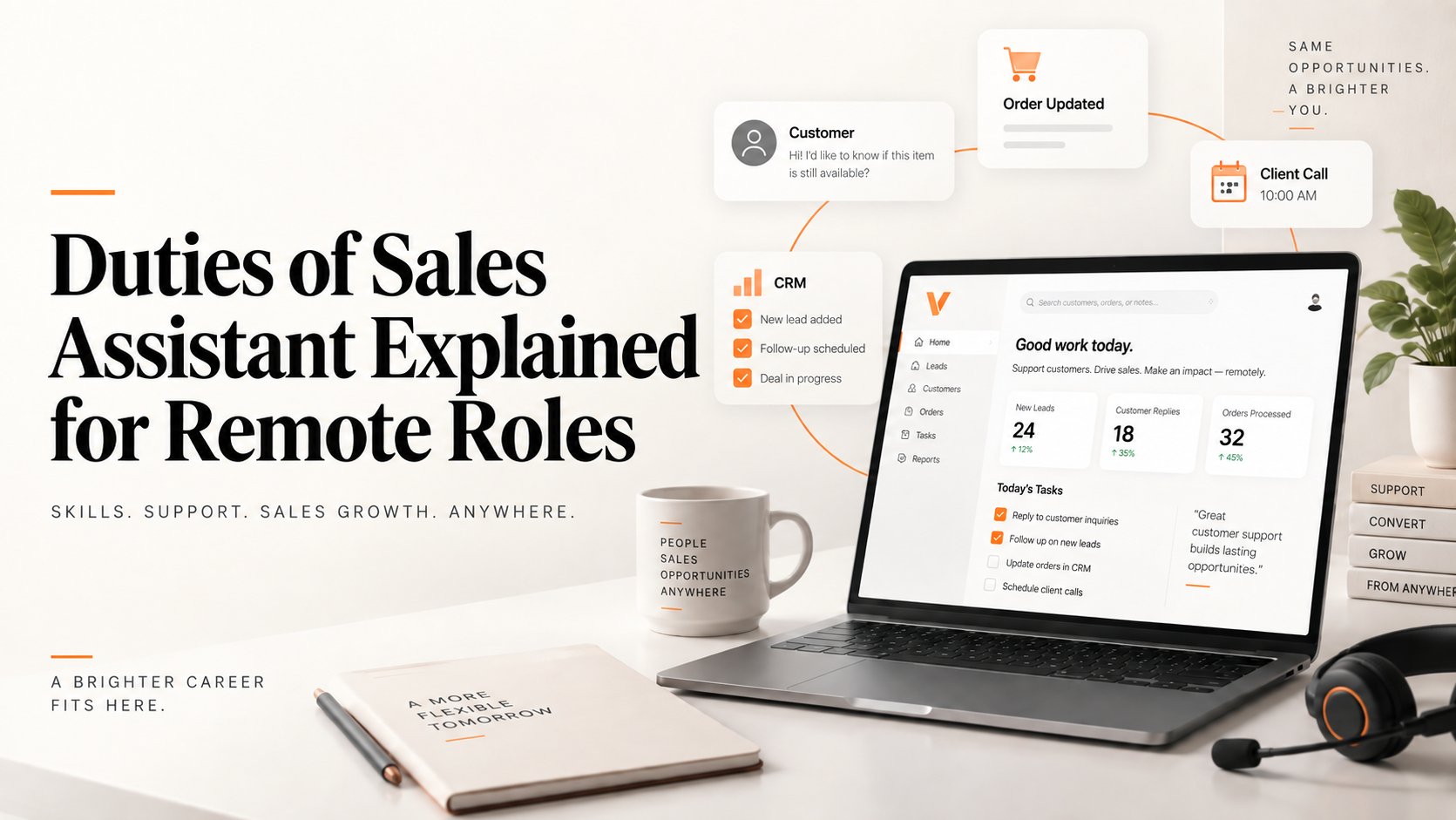
A practical overview of related administrative and follow-up work appears in Virtustant's guide to sales assistant duties.
Practical rule: If an activity doesn't create a conversation, advance an opportunity, support a customer, or preserve accurate pipeline information, keep it from taking over your selling hours.
A benchmark for a healthy remote solo rep frames the day at roughly 65% selling, 25% deep-work prospecting, and 10% administration (Get Gangly's remote sales productivity benchmark). Treat that as a planning reference, not a universal quota. The important lesson is to control CRM work and context switching before they consume the time buyers see.
Essential Tools for Remote Sales Success
The right tools remove avoidable friction that costs selling time. Employers commonly expect remote reps to use a CRM, video conferencing software, team messaging, calendars, and sales engagement systems. Current guidance also highlights relationship-building, persistence, time management, and familiarity with tools such as Zoom, Slack, and CRM platforms (Coursera's guide to remote sales jobs).
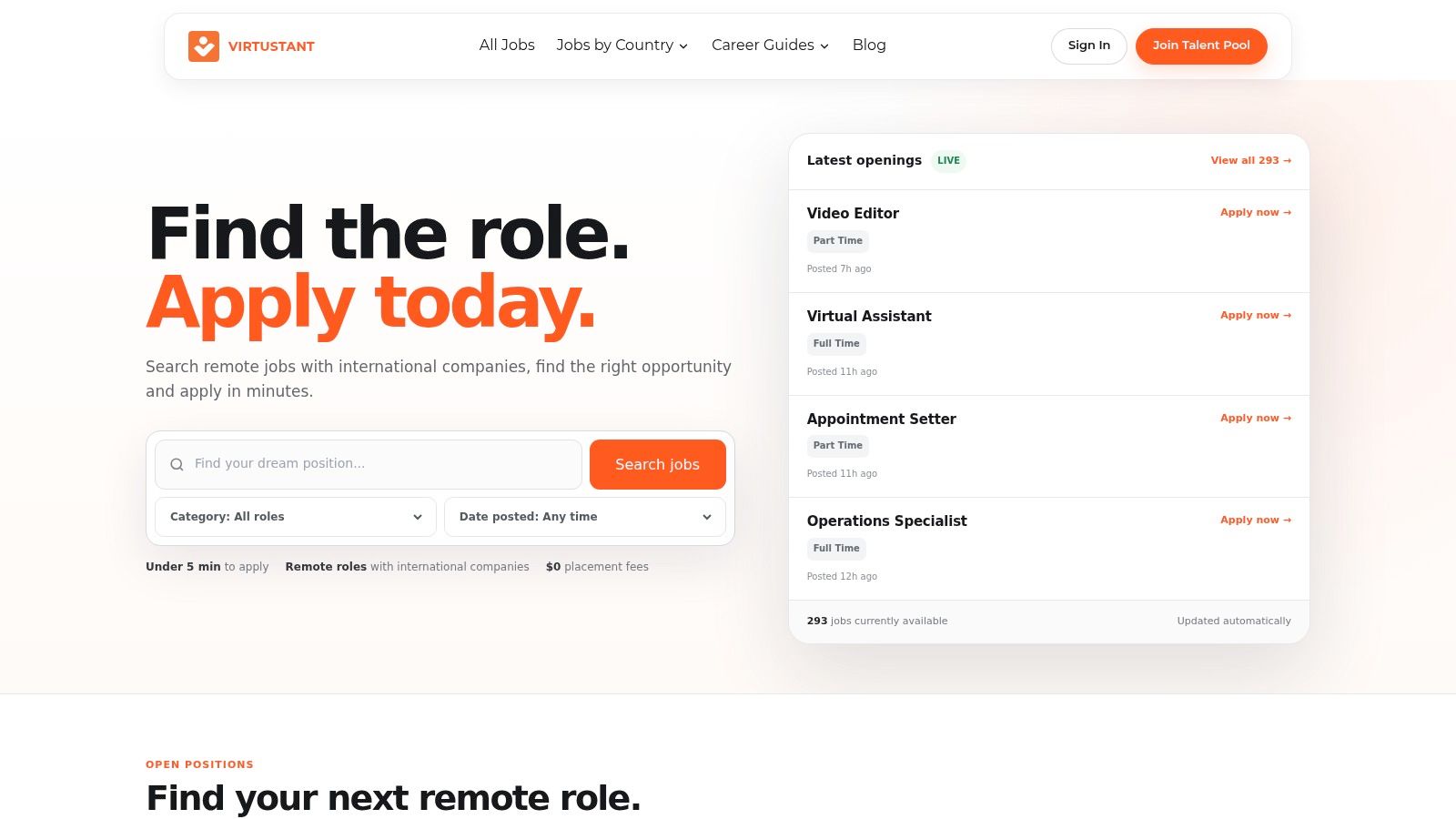
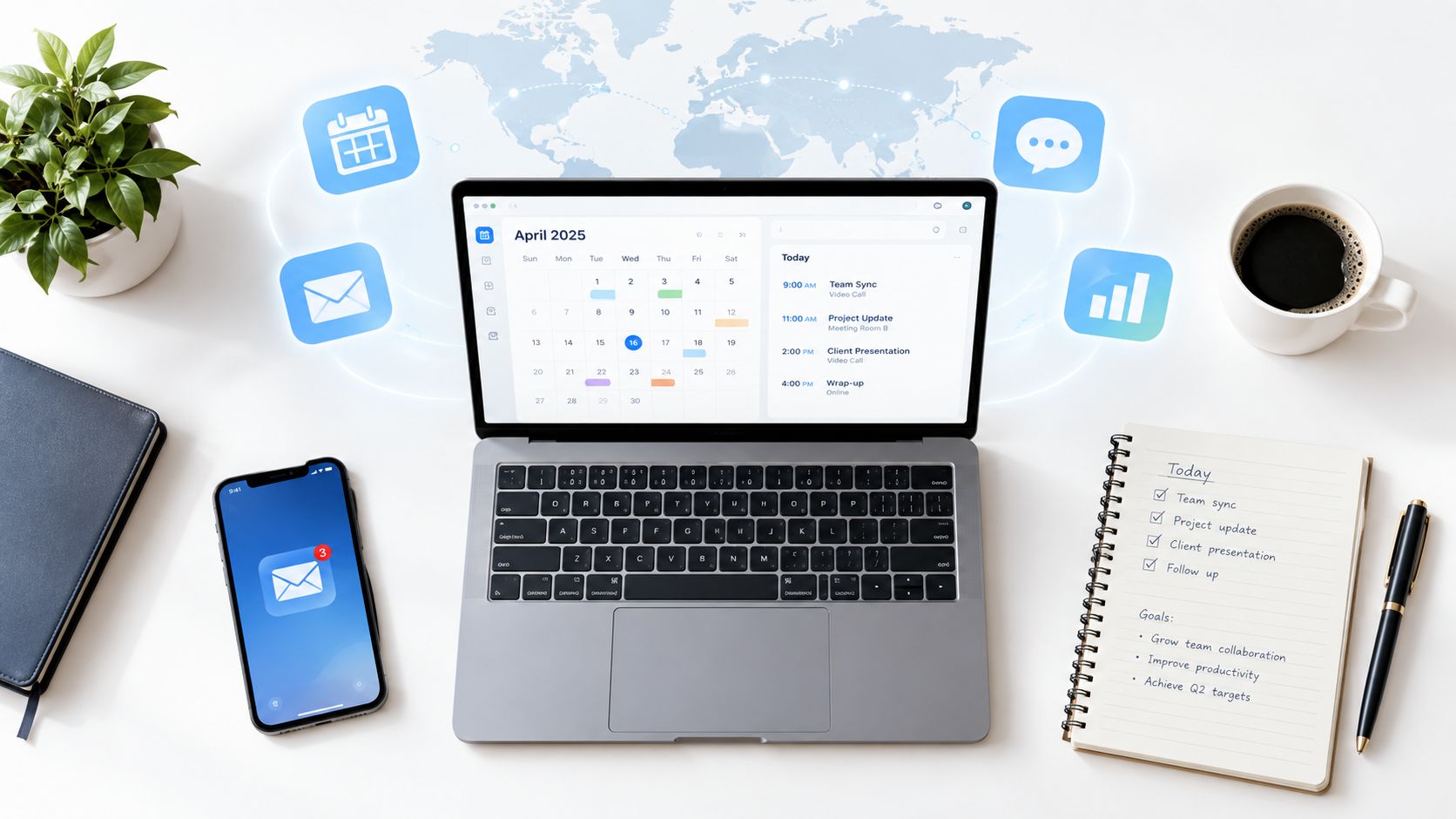
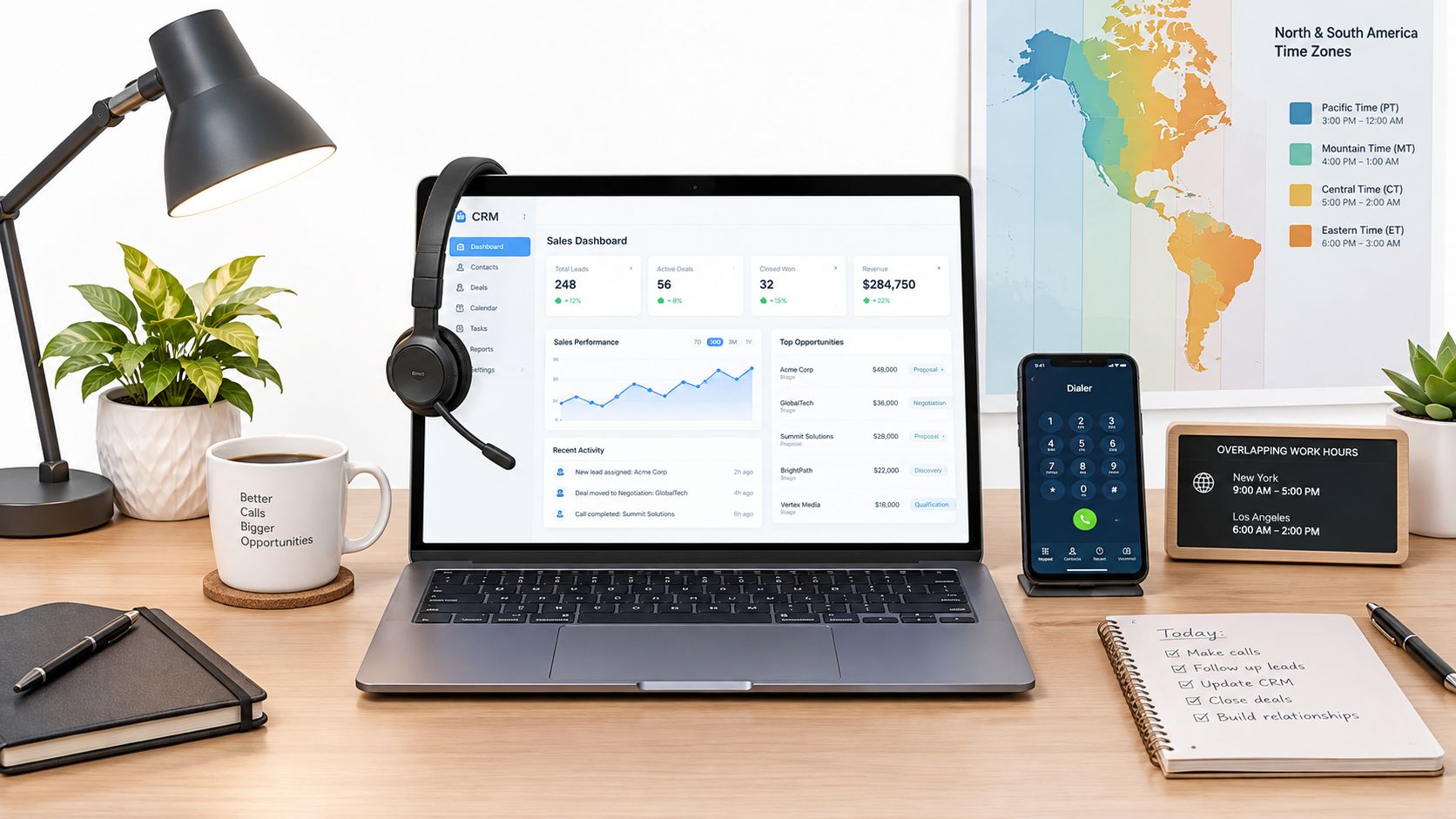
Your CRM should hold the working record for each opportunity. Capture contact details, qualification notes, stages, tasks, meeting outcomes, and next steps so the pipeline remains usable across time zones and handoffs. A dialer supports organized calling, while Zoom or another video tool handles discovery calls and demonstrations. Slack or Microsoft Teams keeps internal questions moving. Set notification boundaries so team chat does not break every prospecting block.
Combine automation with judgment
AI-assisted workflows can support account research, message personalization, call summaries, and task prioritization. Use them to reduce repetitive work and protect time for thoughtful conversations. Review every output before sending. Generic messages, unsupported claims about a prospect, and outreach created without account research can weaken trust quickly.
Candidates preparing for interviews can review best platforms for prospecting to understand how sales teams organize research and outreach. Expertise in every platform is unnecessary. Explain which tools you have used, the work each supported, and how you kept records accurate.
Use job boards as part of the workflow, alongside preparation. Structured listings that spell out responsibilities, tools, and schedules help you avoid applying to roles you cannot staff. Check time-zone expectations before investing in an application.
Sales tools should create a clear handoff from research through outreach, meetings, and reporting. If information gets lost between those stages, fix the process before adding another application.
Key Performance Metrics in Remote Sales
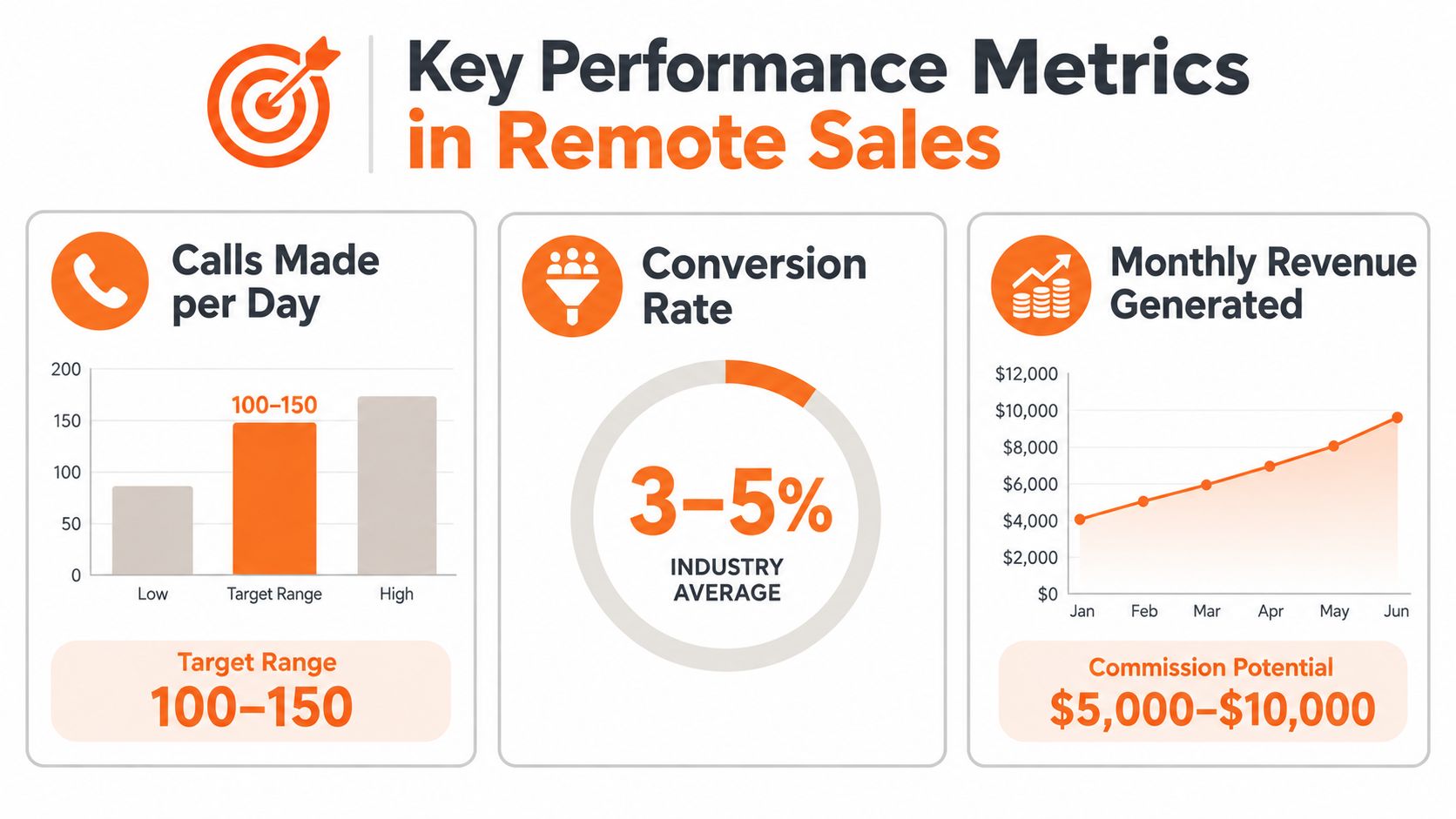
Managers measure remote sales reps through output and commercial progress, not just the number of hours a person appears online. The relevant metrics depend on the role, but they usually connect activity to quality and revenue.
Activity metrics
An SDR may track calls, emails, conversations, qualified meetings, and show rates. These numbers reveal whether enough outreach is happening, but they don't prove that the activity is useful. A high call count with poor targeting can create less pipeline than a smaller, well-researched campaign.
Conversion metrics
Teams may examine the movement from contact to conversation, conversation to meeting, meeting to opportunity, and opportunity to closed business. Your responsibility is to understand which stage you own and how your work affects the next stage. If your meetings rarely progress, review qualification standards and call quality instead of merely increasing volume.
Revenue and pipeline metrics
Closers and account executives are often evaluated through pipeline value, win rate, sales-cycle movement, forecast accuracy, and revenue generated. Account managers may focus on renewals, expansion, customer engagement, and retention. Ask about these expectations during interviews so you know whether the role rewards activity, outcomes, or both.
A 2026 overview reports that field sales reps spend only 43% of their time selling, with the remainder used for non-selling activities (SPOTIO's sales statistics overview). That context supports a useful remote-work principle: protect live selling and prospecting time from unnecessary administration.
Measure the step you can influence, then connect it to the business result the team needs.
You can improve your own diagnosis by learning how to score B2B leads. Lead scoring isn't a replacement for conversation quality, but it can help you prioritize accounts and explain why some opportunities deserve faster follow-up.
Time-Zone Alignment for LATAM Talent
A home-based role still has a schedule. If your buyers work in the United States, employers may need you available during their core business hours for discovery calls, internal meetings, and rapid responses. State your location, time zone, and available working window clearly instead of making a recruiter infer whether your schedule fits.
Time-zone overlap affects more than calendar convenience. Research cited in hiring guidance reports that each additional hour of time-zone difference reduces real-time communication by 11% (Near's guidance on remote sales talent). For a LATAM rep supporting U.S. buyers, that makes shared call blocks especially valuable.
Make compatibility visible
Put your location and schedule near the top of your CV or profile. If you can work aligned with Eastern Time, Central Time, or another required schedule, say so using the employer's terminology. Don't describe yourself as “flexible” if you can only work certain hours. Accurate availability builds trust before the interview begins.
Use synchronous time for activities that benefit from immediate interaction:
- Buyer conversations: Discovery, demos, objection handling, and negotiations.
- Team coordination: Handoffs, deal reviews, coaching, and urgent account questions.
- Fast follow-up: Responses to active opportunities where delay could stall momentum.
Use asynchronous tools for work that doesn't require everyone to be present, such as research notes, CRM updates, recap emails, and routine deal documentation. Virtustant's guide to South American time zones can help you describe regional availability more precisely.
LATAM candidates often bring useful proximity to U.S. working hours, but proximity alone won't secure a role. Pair it with reliable internet, a professional workspace, strong English communication where required, and evidence that you can maintain energy during the employer's core selling window.
Building a Strong Profile for Remote Sales Jobs
A strong application makes it easy for a hiring team to answer three questions. Can you sell? Can you work independently through digital systems? Can your schedule and communication style support the market you'll serve?
Rewrite the CV around sales evidence
Lead with the sales motion you understand, such as outbound prospecting, inbound qualification, full-cycle selling, renewals, or account expansion. Describe your responsibilities precisely. “Managed customer relationships” is weaker than explaining that you handled discovery calls, maintained CRM records, followed up on opportunities, or supported renewals.
Use truthful outcomes when you have them, and don't invent metrics to make the CV look stronger. If your background comes from customer service, recruitment, hospitality, collections, or administrative support, connect those experiences to listening, objection handling, follow-up, organization, and relationship management.
Show tool readiness
List the CRM platforms, dialers, email systems, video tools, and collaboration software you've used. If you learned a platform through training rather than employment, label it clearly and explain what you can do inside it. A recruiter doesn't expect one candidate to know every system, but they do expect you to learn and document processes.
English proficiency is a practical hiring filter for cross-border sales. Some bilingual postings explicitly require fluent English plus another language (ZipRecruiter's remote bilingual sales listings). Include your English level accurately and prepare to demonstrate it in a written exercise, screening call, or role-play.
Prepare the application environment
Remote postings may specify weekday or weekend schedules, a professional home workspace, and reliable wired high-speed internet (Built In's remote sales listings). Check each requirement before applying. Some roles also require applications and CVs in English, prior sales experience, or licensing readiness (Remote's sales job posting).
Use a professional profile photo and consistent information across your CV, profile, and application. If you want to refine your presentation, these headshot composition and lighting advice can help you create a clear, credible image without making the profile feel overproduced.
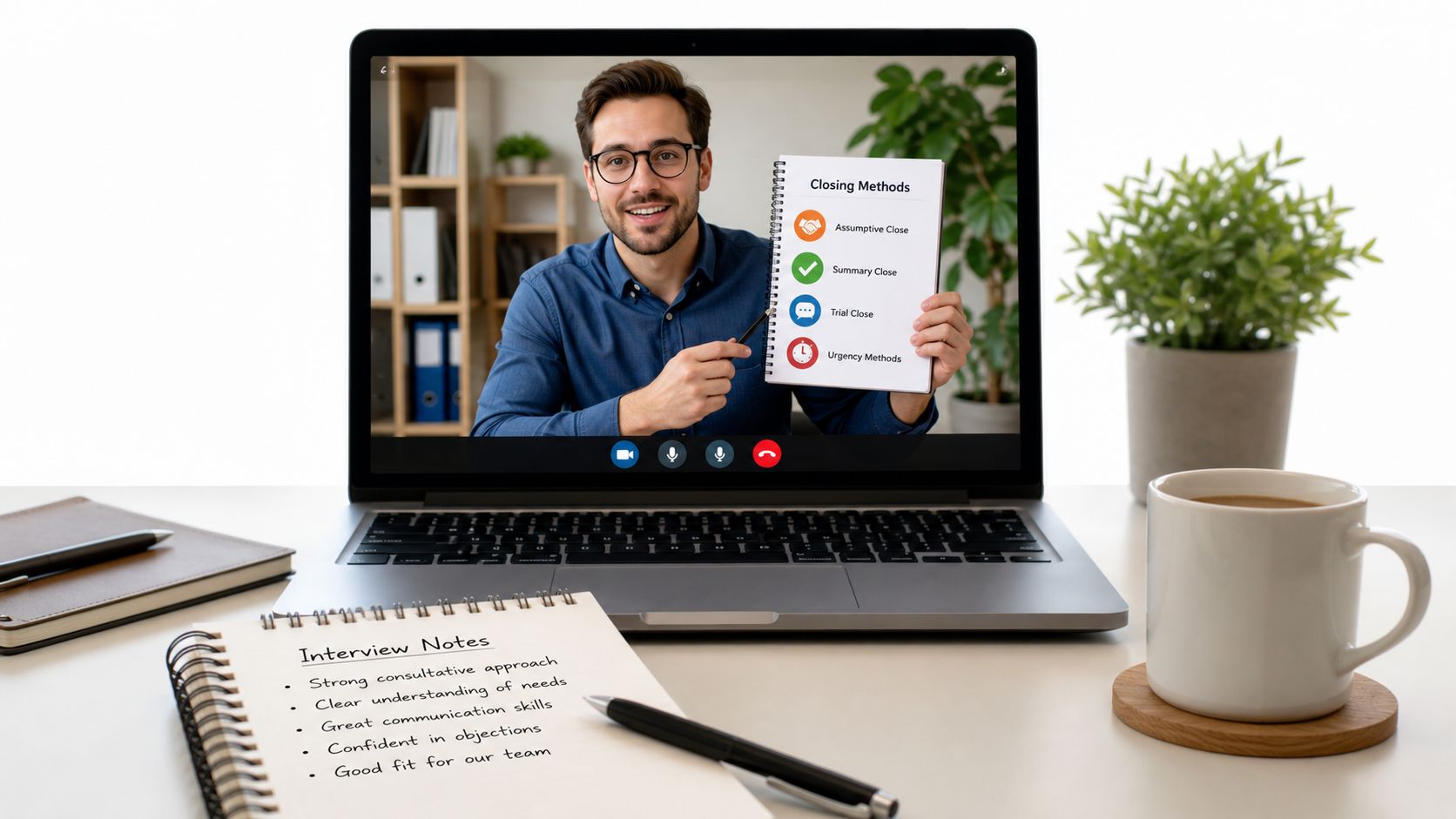
Complete every relevant field on your Virtustant talent profile, including location, language ability, schedule, sales experience, and tools. Then rehearse concise answers to common role-play and behavioural questions using Virtustant's sales interview questions guide.
Next Steps in Your Remote Sales Career
Remote sales rewards candidates who can prove they will perform without constant supervision. Before applying, compare each opening's sales motion, schedule, compensation structure, language requirements, tools, and experience expectations. For LATAM candidates, record the exact working window in the employer's time zone.
This week, choose one target track and build a one-page evidence sheet. List the sales motion you know, two measurable outcomes, the tools you use, and one brief example of handling a stalled deal or missed connection remotely. Use the sheet in applications and interviews, and address any gaps before a recruiter asks.
Virtustant Jobs connects qualified candidates with remote opportunities, including sales roles involving prospecting, qualification, follow-up, and closing. Visit Virtustant Jobs to create your profile, complete your application information, and browse current openings matching your experience and availability.