A salesperson is a real-time demand-conversion professional who qualifies buyer intent and guides customers toward confident decisions. Sales workers represent almost 7% of employment in the European Union and about 8.7% of U.S. employment, so this is a major occupational category, not a niche job title. Cedefop reports around 13.7 million sales workers in the EU in 2022, while U.S. Bureau of Labor Statistics data lists nearly 13.4 million sales and related jobs in May 2024.
You might be exploring a remote job after seeing titles such as SDR, Account Executive, or Sales Closer and wondering whether the work means making endless cold calls. Or perhaps you've already spoken with a prospect online, answered questions about a service, and followed up afterward without realizing that you were performing core sales work.
The modern salesperson does more than present features. They listen for the buyer's actual problem, explain relevant options, reduce uncertainty, coordinate the next step, and help both sides decide whether a purchase makes sense. That distinction matters for professionals in Latin America seeking cross-border roles, because remote sales depends on structured communication, strong English, digital tools, and the ability to build trust without sharing the same office.
Introduction to What a Salesperson Really Does
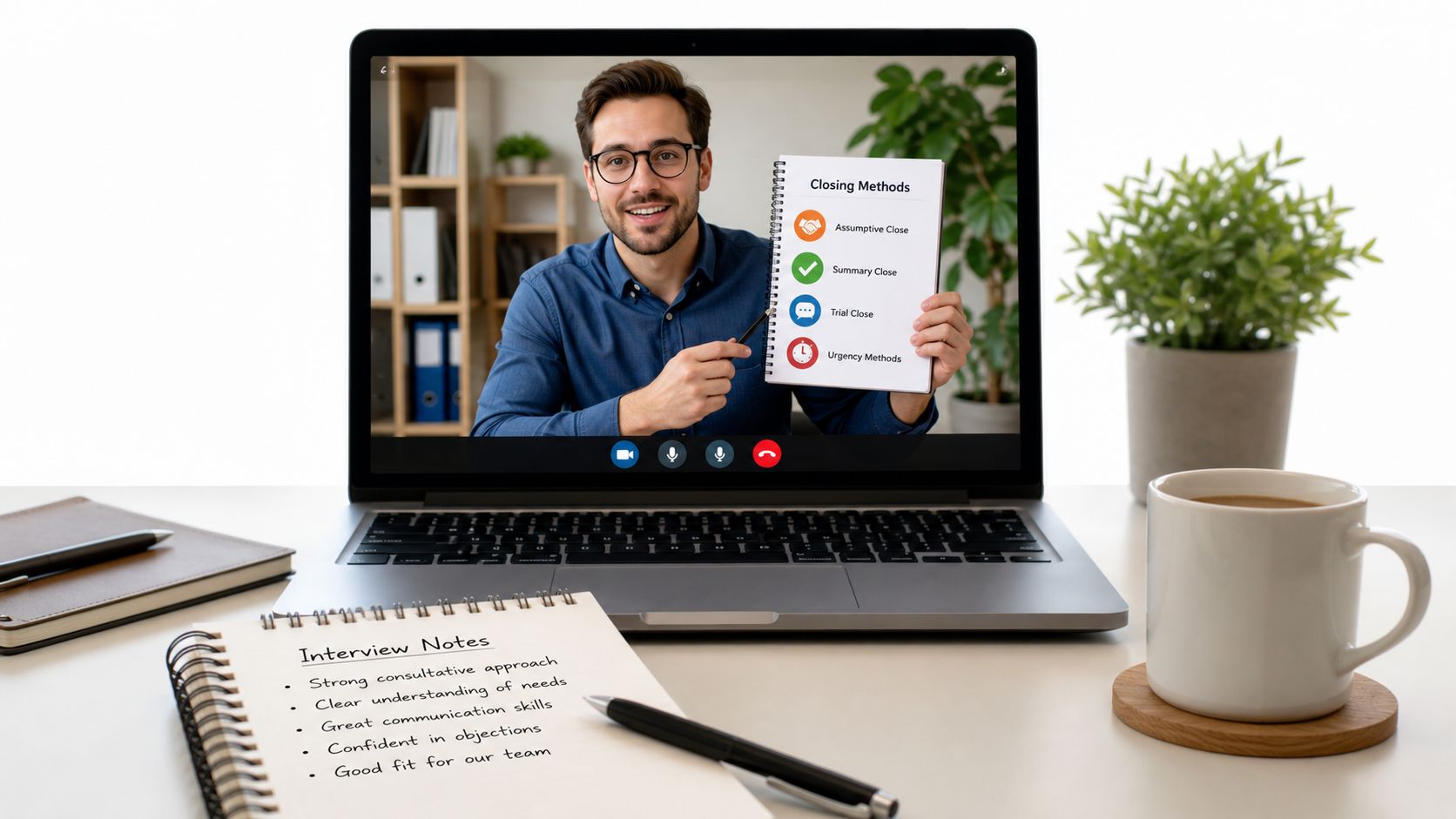
Suppose a potential customer joins a video call because their company needs help with a recurring operational problem. They don't want a memorized presentation. They want to know whether the solution fits their situation, how implementation would work, what could go wrong, and whether the person on the call understands their priorities.
A salesperson guides that conversation. They ask questions, identify intent, connect the buyer's needs to a product or service, respond to concerns, and agree on a sensible next action. Sometimes that action is a purchase. Sometimes it's a product demonstration, a meeting with another specialist, or an honest decision not to proceed.
This is why “salesperson” describes a business function rather than one identical job. A retail representative may help someone choose a product immediately. An SDR may identify potential business customers and schedule qualified meetings. An Account Executive may manage a longer buying process, while a Sales Engineer may explain how a technical solution works.
The role is connected to everyday commerce. In the European Union, 81% of sales workers were employed in wholesale and retail trade in 2021, showing how closely sales work is tied to distribution, customer access, and revenue generation. Cedefop's overview of sales workers also places the modern profession in the longer history of selling, from older forms such as peddling and canvassing to today's structured occupational groups.
For a remote job seeker, the practical question isn't only “Can I persuade people?” It's “Can I understand a problem, communicate clearly, organize follow-up, and help a buyer make a well-informed decision?” The rest of this guide connects that definition to daily duties, performance metrics, specialized titles, and realistic career paths.
Understanding the Core Concept Behind the Salesperson Role
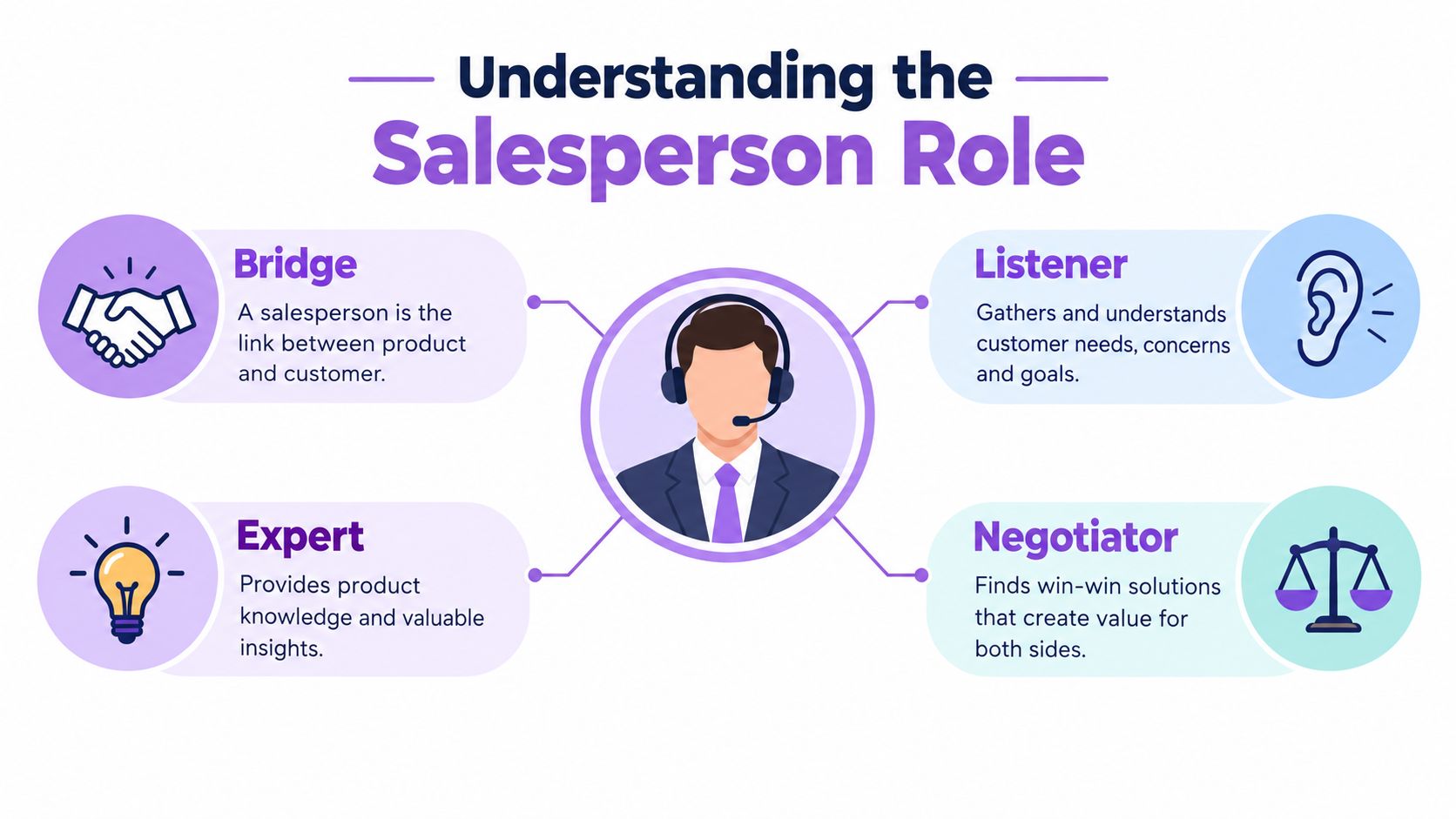
A salesperson sits between two realities: the customer's unsolved problem and the company's unproven solution. The job is to test whether they fit, then give the buyer enough clarity to choose a sensible next step.
The work follows four connected responsibilities:
- Listen for context. Learn what the buyer wants to accomplish, what they have tried, and who takes part in the decision.
- Qualify intent. Check whether the contact has a relevant need, suitable timing, and authority to continue. This keeps unproductive conversations from consuming either side's time.
- Translate value. Explain the offer through outcomes the buyer can evaluate, such as workflow changes, risk, cost, speed, or operational results.
- Support a decision. Address uncertainty, explain tradeoffs, and agree on what happens next without encouraging a poor fit.
Sales work is interactive rather than purely administrative. Conversations may require the salesperson to listen, think, answer, record details, and prioritize requests while the discussion is still developing. Guidance on sales performance metrics published by Highspot supports measuring this work through observable activities and outcomes, rather than treating customer contact as an occasional task.
Core idea: A salesperson does not simply push a product toward a buyer. They help turn a real need into a clear, mutually understood decision.
That role is why modern selling often resembles guidance more than a one-direction pitch. A survey cited in HubSpot's sales strategy report found that 36% of sales professionals identify confidence-building as their primary job. In practical terms, confidence comes from explaining limits, answering questions in plain language, and making the post-purchase process understandable.
The same principle applies across job subtypes. An SDR builds early buyer confidence by establishing relevance and arranging a useful conversation. An Account Executive helps the buyer compare options and reach a commercial decision. A Sales Engineer builds confidence in technical fit by explaining how the solution would work in the customer's environment.
For a remote job seeker in Latin America, these differences matter. Remote SDR roles may emphasize research, written outreach, and clear qualification. AE work usually requires organized video conversations and follow-up across a longer buying process. Sales Engineer positions call for technical understanding plus the ability to explain complex details clearly. Across all three, careful listening, concise writing, and dependable follow-up help replace the trust signals that an in-person meeting might otherwise provide.
Core Duties and Daily Responsibilities Explained
A salesperson's day follows a workflow. The exact tools and targets vary, but the work generally moves from finding potential buyers to understanding them, presenting a relevant option, securing a decision, and maintaining the relationship.
Finding and qualifying opportunities
Prospecting means identifying people or organizations that might benefit from the offer. An SDR could research business websites, review inbound forms, work from a list in HubSpot or Salesforce, and send a personalized email. The goal isn't to contact everyone. It's to find a reasonable match.
Qualification follows the first response. The salesperson may ask about the buyer's current process, urgency, decision authority, budget context, or desired outcome. A qualified lead has enough relevance for a useful next conversation. An unqualified lead may need nurturing, a different resource, or no further outreach.
Learning before presenting
During discovery, the salesperson listens more than they speak. They might ask a remote operations manager where delays occur, which tools the team uses, and what a successful change would look like. Those answers shape the demonstration and prevent a generic presentation.
A strong salesperson also records accurate notes in the CRM. The next colleague should understand the customer's problem, prior questions, agreed action, and timing without asking the buyer to repeat everything.
Explaining the solution and handling concerns
A presentation can include a virtual demonstration, proposal, comparison, or short explanation of how the service fits the customer's workflow. The salesperson connects capabilities to the buyer's stated need instead of listing every feature.
Objections aren't interruptions to defeat. They often reveal missing information. A concern about price may reflect uncertainty about value. A question about implementation may indicate that the buyer needs a clearer plan or wants another stakeholder involved.
Agreeing on the next step
Closing can mean signing an agreement, confirming an order, booking implementation, or securing a specific follow-up meeting. Good closing keeps the process clear. The salesperson confirms who will do what, by when, and what information remains necessary.
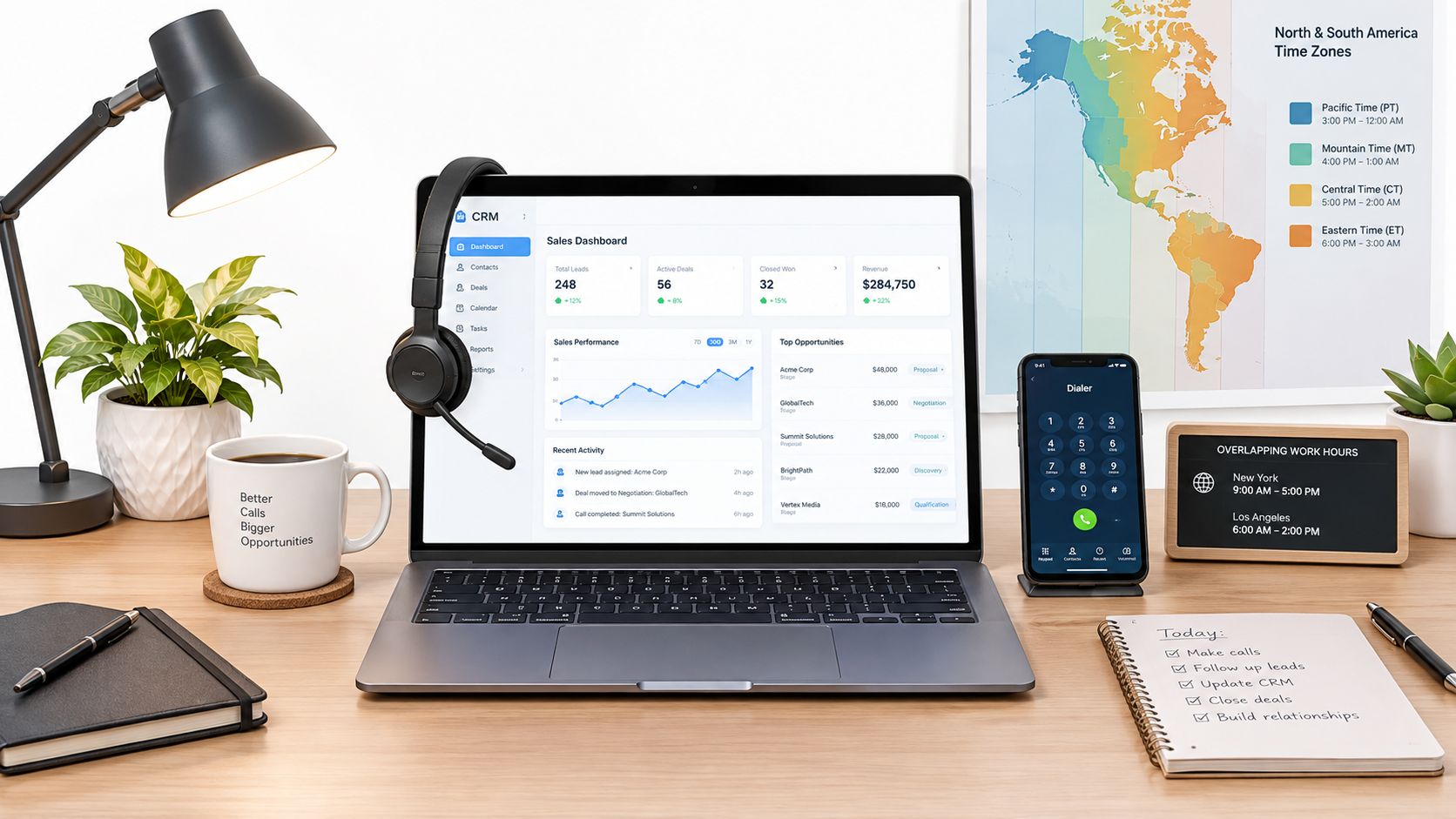
After the decision, follow-up protects the relationship. The salesperson checks whether expectations were met, passes useful context to Customer Success or Operations, and keeps accurate records. For LATAM professionals working with U.S. companies, job descriptions may also specify EST hours, English requirements, and tools such as Excel, CRM platforms, or scheduling software. Treat those details as part of the role, not minor administrative notes.
A remote salesperson needs a reliable routine: protect calling and meeting time, prepare before virtual conversations, write concise follow-ups, and update the CRM before details disappear. These habits make communication visible to managers and useful to teammates.
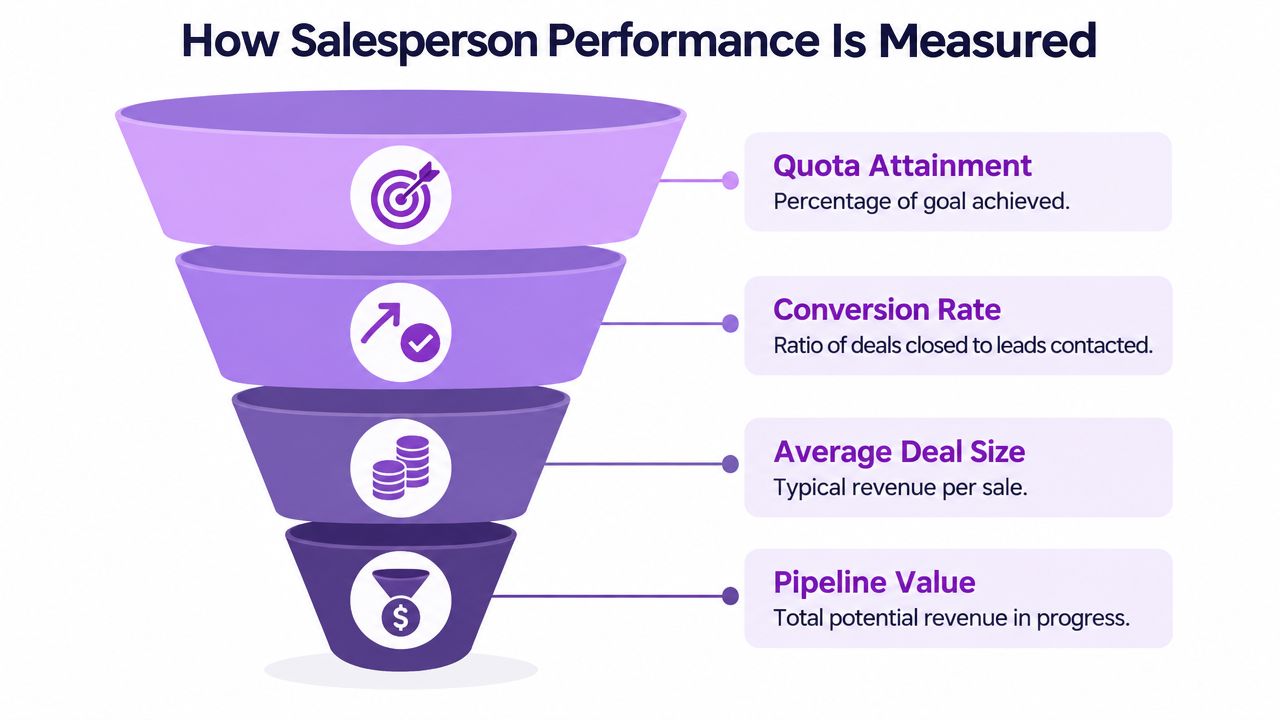
How Salesperson Performance Is Measured
A salesperson can sound confident on every call and still miss the target. Managers therefore review outcome and behavior KPIs, or key performance indicators, to see whether daily work is creating real progress through the pipeline.
The main measures answer different questions:
- Quota attainment: How much of the assigned sales goal has been reached?
- Win rate: What share of qualified opportunities becomes closed business?
- Pipeline coverage: How does the value of active opportunities compare with the target?
- Sales cycle length: How long does an opportunity take to reach a final decision?
- Activity-to-meeting conversion: How effectively do calls, emails, and other outreach produce useful meetings?
These measures work like links in a chain. A high message count has limited value if the outreach reaches the wrong audience. Meetings may still produce few deals when qualification is weak. A small pipeline can keep quota attainment low even when the salesperson is working consistently.
For context, LinkedIn's role-by-role sales metrics guide describes B2B examples of roughly 3.1x to 4x pipeline coverage, a 20% to 21% win rate, and 90 to 270 day sales cycles, depending on the deal and selling environment. These figures are reference points, not promises. They show how a longer sales process requires enough qualified opportunities to support the target.
Pay also varies by specialization and experience. The mean annual wage for sales and related occupations was $53,280 in May 2023, according to The BLS occupational wage tables. The broader sales group had a median annual wage of $38,530 in May 2025. A remote job seeker should compare the full offer, including base pay, commission structure, territory, schedule, and role expectations.
Market conditions can change with the economy. Unemployment among sales and related occupations was 4.3% in April 2026, as reported in the cited labor data. Applicants should ask which KPI receives the most attention and how the company defines a qualified opportunity, a successful meeting, and a closed deal.
Common Salesperson Job Titles and Specializations
“Salesperson” can refer to several jobs with different stages of the customer journey. An SDR typically creates and qualifies opportunities. An Account Executive manages a broader sales process. A Sales Engineer combines customer communication with technical explanation. Customer Success and Account Management focus more heavily on retention, adoption, and the ongoing relationship after purchase.
Hiring coverage cited by Rainmakers' sales hiring trends points to demand across Account Executives, SDRs, Sales Engineers, and Customer Success or Account Management roles. The same source reports that global sales hiring interest rose 8.5% in 2026, while demand varied by market and specialization. It also identifies stronger interest in Technical Sales and SDR or lead-generation roles, alongside a decline in Sales Operations and coordination hiring. These signals don't mean every candidate will find the same opportunity, but they show why choosing a specialty matters.
Salesperson specializations compared
| Job Title | Primary Focus | Key Skills and Tools | Remote Demand Signal |
|---|---|---|---|
| SDR or BDR | Prospecting, outreach, and qualification | Email, calling, CRM research, sequencing tools | Strong interest in lead-generation work |
| Outbound Sales | Creating demand through targeted contact | Prospect research, cold calling, follow-up, CRM discipline | Common entry point for remote candidates |
| Sales Closer | Moving qualified opportunities to a decision | Discovery, objection handling, negotiation, proposals | Suits confident communicators with closing experience |
| Account Executive | Managing opportunities through the sales process | CRM forecasting, presentations, proposals, stakeholder management | Clear path toward full-cycle selling |
| Sales Engineer | Explaining technical fit and solution design | Product knowledge, demos, technical discovery, collaboration | Technical Sales shows strong hiring interest |
| Customer Success or Account Management | Supporting customers and strengthening ongoing relationships | Onboarding, communication, account reviews, customer platforms | Relevant for relationship-focused professionals |
| Partnerships Coordinator | Developing referral and channel relationships | Outreach, coordination, reporting, partner communication | Connects sales with business development |
| Telesales | Selling or qualifying through phone conversations | Call structure, active listening, scripts, CRM updates | Fits candidates comfortable with sustained verbal contact |
A remote candidate shouldn't choose a title based only on the word “sales.” Someone who enjoys research and opening conversations may fit an SDR role. Someone who explains software naturally may prefer Sales Engineering. A professional who builds trust after the contract is signed may be better aligned with Customer Success.
Read the job description for the actual work. Look for the sales stage, customer type, CRM, calling expectations, language level, working hours, and whether compensation includes commission. Those details reveal the job more accurately than the title.
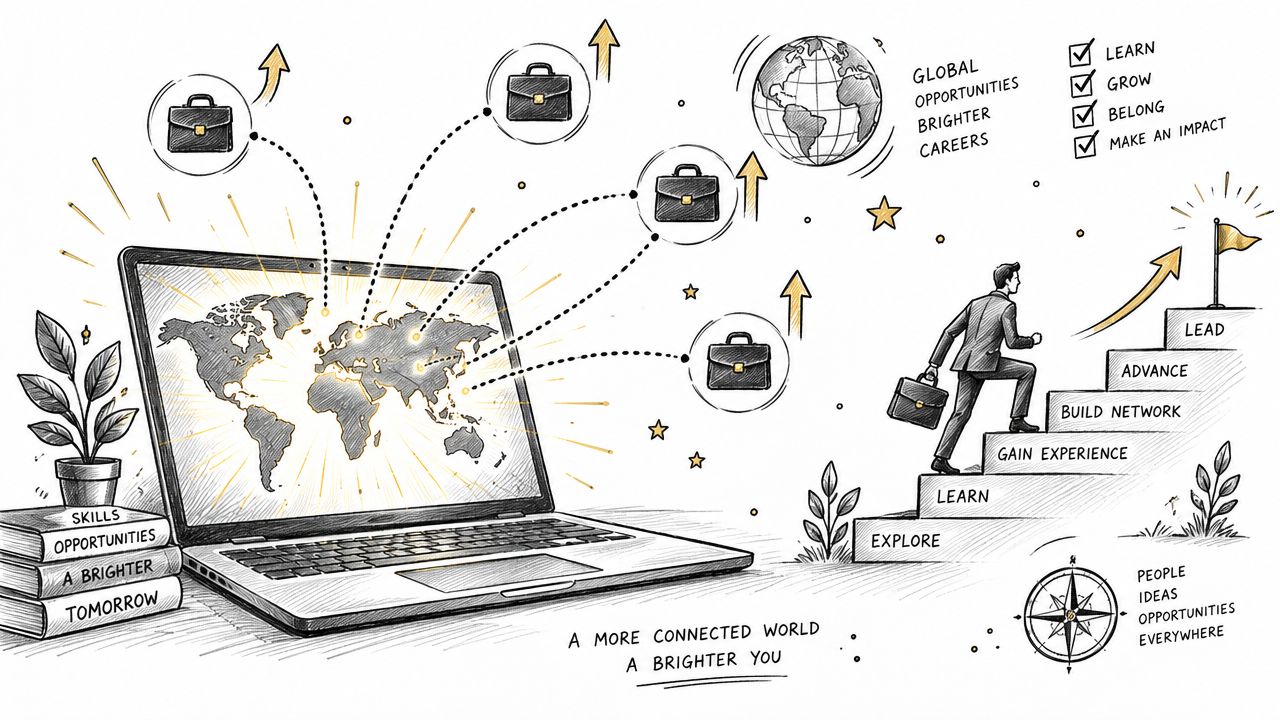
Building Your Salesperson Career Path Remotely
A practical remote path often starts with SDR or BDR work, where you build skill in prospect research, outreach, qualification, and CRM accuracy. From there, you might move into an Account Executive position and manage more of the buyer journey. Other routes lead toward Sales Engineering, Customer Success, Account Management, Partnerships, or Sales Operations, depending on whether you prefer technical problem-solving, long-term relationships, or process improvement.
Remote employers need more than enthusiasm. They look for clear written English, confident video communication, reliable follow-up, comfort with tools, and the ability to work independently during agreed U.S. business hours. Create evidence of those abilities through a concise resume, a recorded practice introduction, sample follow-up emails, and examples of how you organized leads or handled customer questions.
Use a simple evaluation checklist before applying:
- Role fit: Identify whether the position is prospecting, closing, technical, or post-sale.
- Communication fit: Check the stated English level and the amount of customer-facing work.
- Schedule fit: Confirm whether the role follows EST or another time zone.
- Tool fit: Review requirements for Salesforce, HubSpot, spreadsheets, call software, or other platforms.
- Pay fit: Understand the base, commission, currency, and employment arrangement.
- Growth fit: Ask what performance qualifies someone for the next role.
For a centralized search, Virtustant Jobs publishes remote sales openings for roles such as SDR/BDR, Outbound Sales, Sales Closer, Partnerships Coordinator, Telesales, and Sales Support, with postings that can specify responsibilities, software, schedules, and language expectations. Candidates can review those requirements, use the site's standardized application process, and join its talent pool for possible future matching.
You don't need to present yourself as a generic salesperson. Choose the part of the buyer journey that fits your strengths, then show employers that you can turn conversations into organized, trustworthy progress.
If you're ready to test your fit for remote sales, visit Virtustant Jobs to review LATAM-focused openings, compare role requirements, and apply to positions that match your communication, prospecting, technical, or relationship-building skills. Create a focused application, verify the schedule and English expectations, and start building a salesperson career around the specialization you want.